






Step into a stadium on game day, and the impact is immediate. The roar of the crowd. The first glimpse of the field. Thousands of people, united in a single shared moment. Sports venues create something bigger than the game — they bring people together and reflect the energy of an entire city.
Behind every sports moment, however, is an equally monumental undertaking: a massive, multi-year effort to plan, design, and deliver the physical environment that makes it all possible.

In many ways, sports and construction share the same core components: coordinated teams, defined roles, and strong performance under pressure. In both cases, success requires alignment across a large, diversely skilled team working toward a common goal.
For owners and developers of modern sports infrastructure, this parallel is more relevant than ever.
From Stand-Alone Stadiums to Mixed-Use Districts: Managing the Complexity of Modern Sports Development Projects
Today’s stadiums are no longer stand-alone venues. They serve as anchors within broader mixed-use districts, creating integrated environments that bring together entertainment, retail, residential, and public space — expanding opportunities for communities but also raising the stakes for successful program delivery.
The success of a sports development project is no longer defined solely by what happens during the game itself, but rather by the quality of the entire ecosystem it creates. This ecosystem includes:
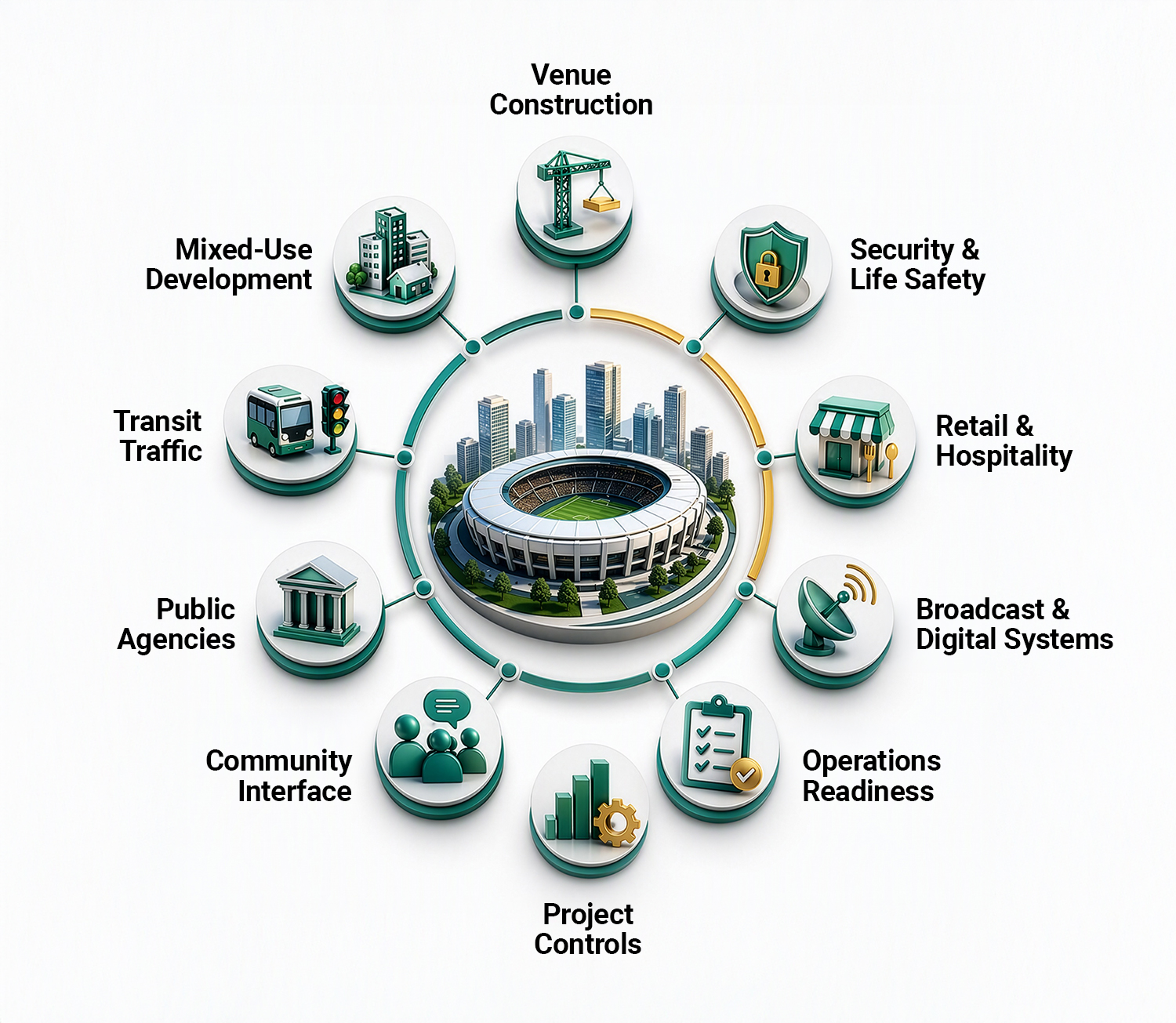
Each of these outcomes is directly influenced by how the project is planned and delivered. Decisions made during early design phases can have significant consequences on how the venue operates for decades to come.
Integration as a Critical Risk Driver in Mega-Projects
Because modern sports districts are now being designed as “mini cities” rather than single-purpose venues, owners and project teams must proactively coordinate a much broader set of stakeholders and systems on day one.
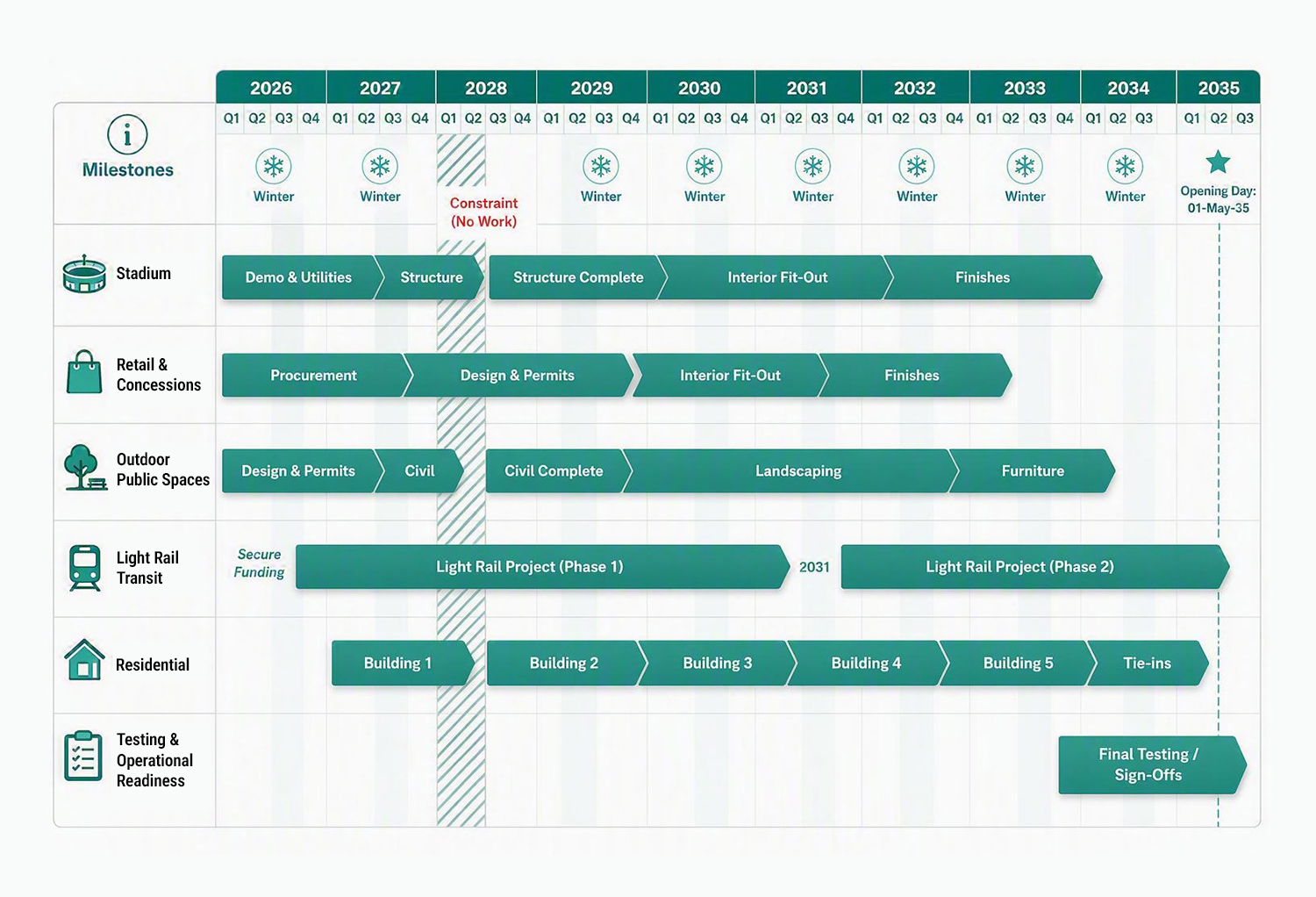
Examples of sports venue systems and stakeholders include:
- Concessions and retail operations
- Security and life safety systems
- Transit access and traffic management
- Medical and emergency response planning
- Broadcast infrastructure and digital systems
- Mechanical, electrical, and commissioning processes
- Mixed-use integration of near-by residential, commercial, and public spaces
- Advanced technology systems, smart infrastructure, and cybersecurity
Each of these components has its own requirements, timelines, and constraints. If they are not coordinated early, conflicts emerge late becoming more expensive and more difficult to resolve.
Large programs involving multiple stakeholders are particularly vulnerable to coordination breakdowns and schedule delays. In the context of a stadium district, those breakdowns can directly affect game-day readiness.
Strategies for Successful Delivery
Integrated scheduling and coordinated phasing are essential to managing interdependencies and adapting to changing conditions. Without an integrated approach, schedules may become misaligned, interfaces may be missed, and operational readiness could be delayed. For sports infrastructure, this is especially critical because opening dates are often fixed and highly public.
Owners who consistently deliver successful mega-projects tend to approach them less like individual builds and more like interconnected programs.
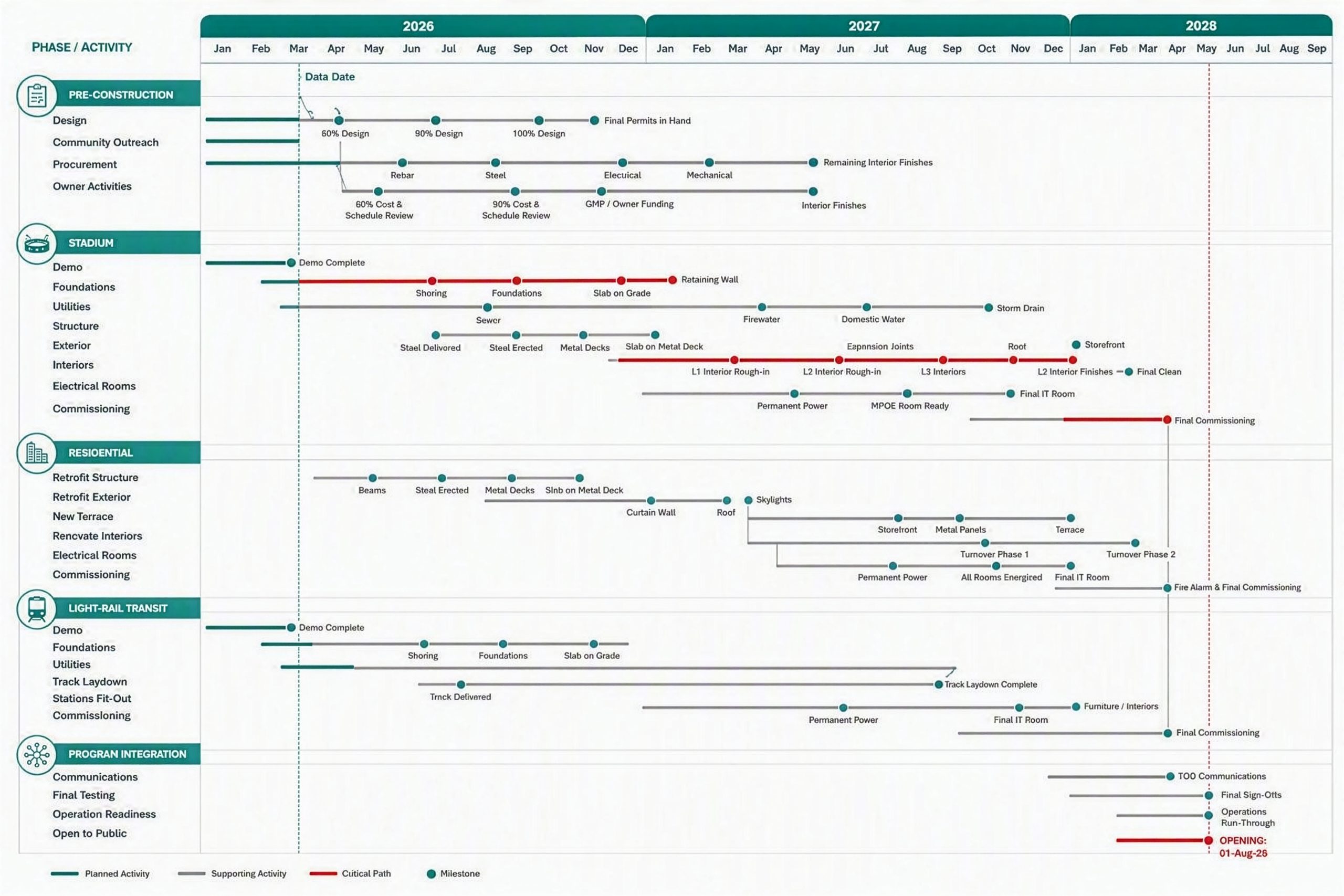
Strategies for successful delivery include:
- Early alignment on objectives and criteria for success
- Integrated master schedules that link design, construction, and operations across projects
- Centralized organizational structures to manage multi-agency coordination
- Consistent project controls, including cost, schedule, and risk tracking
- Proactive stakeholder engagement and consistent communication processes
As sports districts continue to grow in scale and complexity, proactive controls and interface management are becoming the defining factors in project success.
Impacts of Infrastructure — Why Does It Matter?
Stadiums are built for more than competition — they are places where sports history is made, communities gather, and shared moments become part of a city’s identity. On the biggest stages, venues can connect people across regions, cultures, and countries, as fans, athletes, visitors, and locals come together around a common experience.
This impact has been especially visible this year. New York celebrated the Knicks’ first NBA championship in more than five decades. Cities across North America welcomed global visitors for the 2026 FIFA World Cup, with U.S. venues playing a central role in a tournament of unprecedented scale. Los Angeles is preparing to host Super Bowl LXI in 2027, followed by the 2028 Olympic and Paralympic Games. The momentum surrounding sports infrastructure is not confined to a single city or event; it reflects a broader recognition that these venues can become platforms for civic pride, global connection, and long-term economic and community value.
The scale of this influence raises the stakes for project delivery. For owners, the question becomes clear and pressing: How do project teams organize, coordinate, and control a program of this scale before complexity causes disruption?
The next article will explore that question through practical tools for proactive coordination, integrated scheduling, and stakeholder alignment.
In both sports and construction, the outcome is not defined by the plan on paper but rather by how well the team executes when the stakes are high.
What’s Next in the Owner’s Playbook?
- Best practices for integration and coordination of complex mega-projects
- The importance of consistent performance metrics for successful project delivery
- Why team culture and alignment matter as much as technical planning
- How to manage schedule pressures and non-negotiable opening days
© Copyright 2026. The views expressed herein are those of the author(s) and not necessarily the views of Ankura Consulting Group, LLC, its management, its subsidiaries, its affiliates, or its other professionals. Ankura is not a law firm and cannot provide legal advice.

